
Reefer Container
Working principle and characteristics
of Reefer containers:
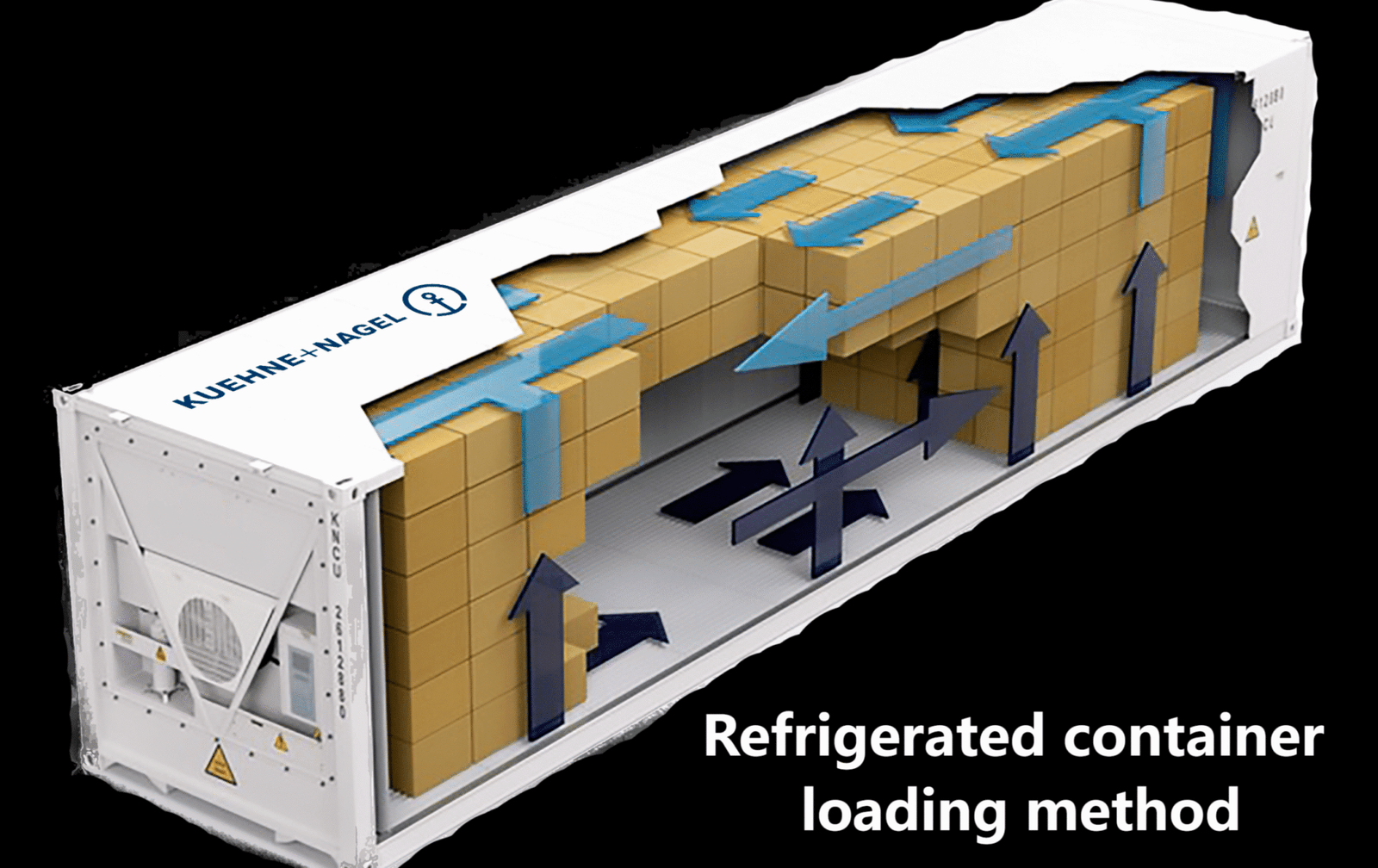
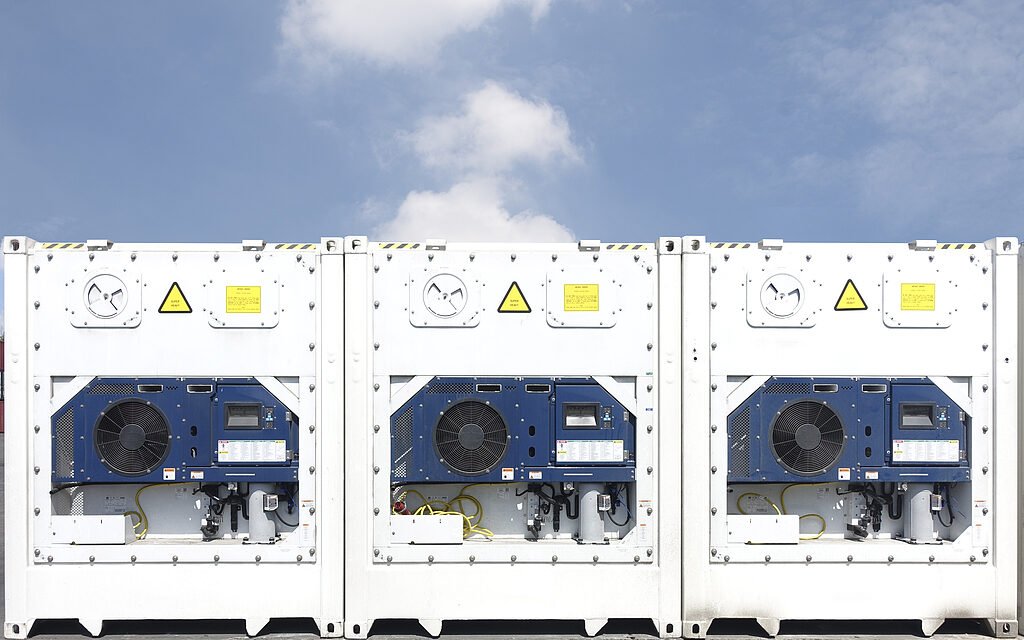
They are designed to maintain the temperature, humidity and atmosphere of the container at a constant value during the whole transit time.
There are 4 settings that must be considered when shipping reefer cargo: temperature, ventilation, humidity and drainage.
- Temperature:
- All standard reefer containers are built to maintain a temperature between +25° C and -25° C for chilled and frozen cargo. A certain percentage of the global reefer fleet is also capable of maintaining a temperature down to -35° C or even lower. Special containers (super freezers) can maintain a temperature down to -70° C.
- Ventilation:
- For a chilled temperature, air must flow through the cargo at all times to remove heat and gases. Therefore, the transport boxes used should have ventilation. Fresh air ventilation is required for fruits and vegetables. For frozen goods, air must flow around the cargo. There must be no large gaps between the cargo, the walls and the cargo itself. The cargo should be stowed in blocks.
- Humidity:
- Some products benefit from a lower level of humidity in the air. A reefer unit has a dehumidification function which can lower the level of moisture in the air. Although some newer units can reach 50%, the standard is between 60% and 85% relative humidity (RH).
- Drains:
- These are used to release excess water that may accumulate inside the containers. In addition, their design prevents water or insects to get into the container.
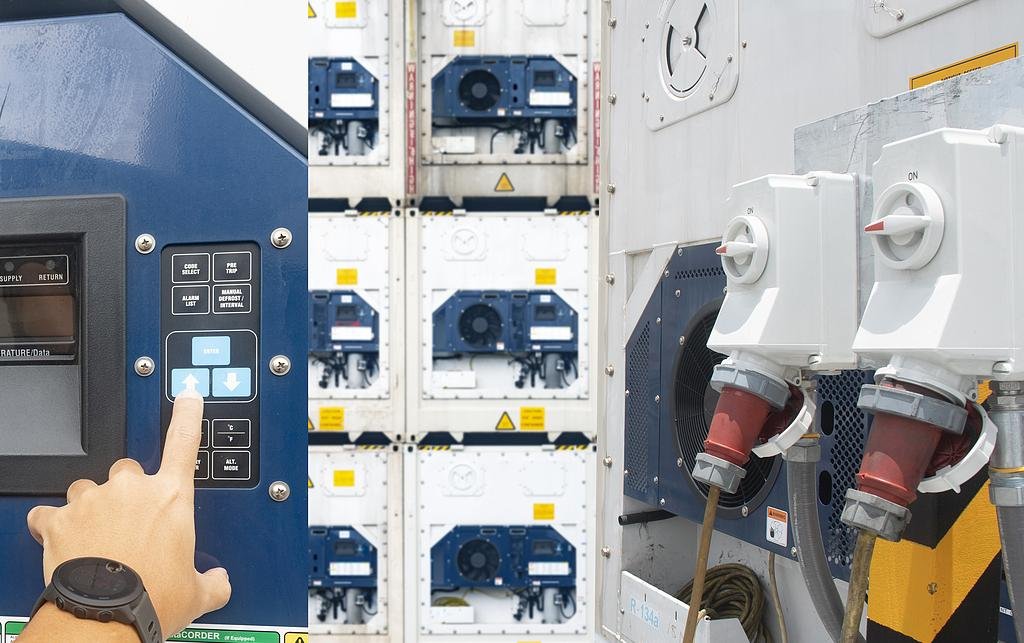
Inside the container is a microprocessor, which is the electronic temperature recorder. This device stores all data, such as supply air and return air temperature, remote cargo probe temperatures, defrost activity, changes to the setpoint, power on and off time, etc. In order to record the cargo temperature of certain shipments, cargo probes can be utilised. These probes are cables with a temperature-sensitive element fixed to one end. Kuehne+Nagel offers an additional, carrier-independent monitoring device (portable data logger) that is compatible with our tracking and tracing systems. This provides you insights into the temperature data of your goods at any time.
A refrigeration unit is built to maintain a certain temperature, not to bring the load to the desired temperature. The cargo has to be precooled to the set point temperature prior to loading. Especially for fresh fruits and veggies, reducing the temperature after harvest to the optimal transport temperature is crucial to guarantee good quality and ensure the best possible shelf life.
Standardized use process of Reefer containers
|
. |
. |
| – Check the operating status of the refrigeration unit (power-on test ≥ 30 minutes) – Make sure the drainage holes are unobstructed and there is no water accumulation or odor in the cabinet |
| – Set the required temperature for the goods and pre-cool them to the target temperature ±0.5℃ (medicines require ±0.3℃) – Precooling time: 40FT ≥ 3 hours |
| – Agricultural products/food: precool the core temperature to the transportation temperature + 1°C – Pharmaceutical products: Use refrigerated trucks for docking and loading, exposure time < 5 minutes |
|
|
|
Remote monitoring protocol
– Data frequency: transmit temperature/humidity data every 2 minutes for medicines and every 10 minutes for food
– Alarm threshold:
• Temperature deviation: set value ±2℃ (medicine)/±3℃ (food)
• Power failure alarm: notify immediately if it lasts for more than 8 minutes
– Backup power supply: equipped with dual refrigeration units or cold storage plates (maintained for 72 hours at -20℃ environment)
Emergency Plan (Graded Response Mechanism)
Event level: Level I (red alert)
Judgment criteria: temperature exceeds the standard by >4℃ for more than 1 hour
Response time limit: within 15 minutes
Handling team: technical team + customer representative + insurance company
Event level: Level II (yellow warning)
Judgment criteria: Equipment failure but temperature within the safe range
Response time limit: within 30 minutes
Handling team: local maintenance station + backup power support
Event level: Level III (blue warning)
Judgment criteria: short-term power outage (<30 minutes) without temperature rise risk
Response time limit: within 2 hours
Disposal team: operator on-site confirmation
Specific scenario handling solutions
Scenario 1: Refrigeration failure during transportation
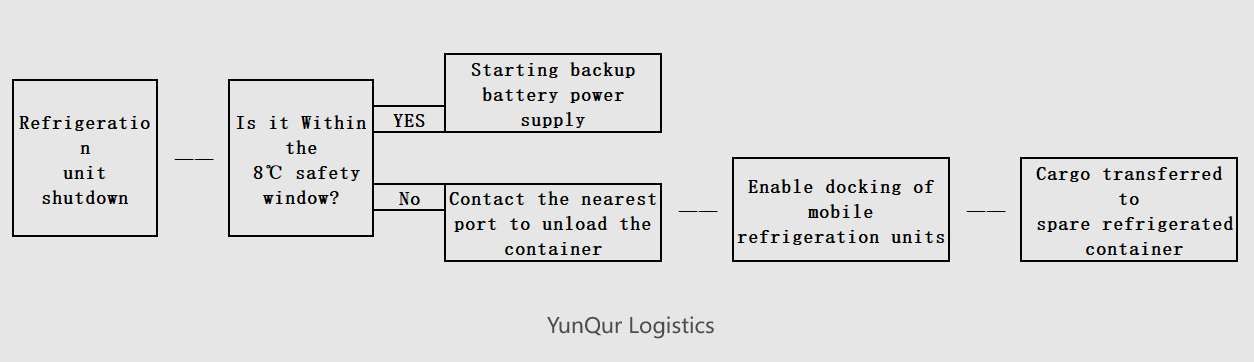
Scenario 2: Cabinet door accidentally opened
Disposal steps:
1. The driver receives a notification via the GPS door magnetic alarm
2. Remotely retrieve the cabinet monitoring to confirm the reason for the door opening (theft/collision/misoperation)
3. If the door is opened for > 5 minutes:
Medicine: Start the cargo value stop loss procedure (contact the consignee for evaluation)
Food: Decide whether to continue transportation after temperature measurement
Scenario 3: Power outage caused by cross-border customs clearance delays
1. Obtain the customs clearance queue time at the destination port 72 hours in advance
2. If the expected delay is > 4 hours:
• Enable self-provided diesel generator (report to customs in advance)
• Apply for priority plug-in at the port (surcharge required)
3. Pharmaceutical goods: Apply for temporary storage in a supervised warehouse (temperature control records required)